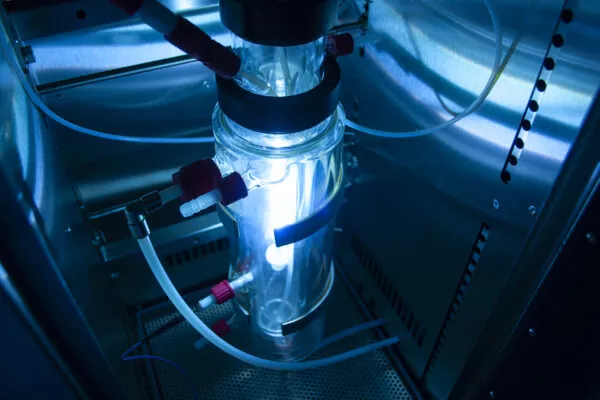

Photochemistry, the branch of chemistry concerned with reactions initiated or driven by light, has long held promise for enabling more selective, efficient, and sustainable chemical transformations than thermally driven alternatives. Realizing this promise at practical scale requires equipment specifically designed to deliver controlled light exposure to reacting mixtures with precision and reproducibility. Modern photoreactor systems have made photochemical reactions accessible to research laboratories and industrial process developers in ways that improvised setups never could.
The Principles Behind Photochemical Reactions
Photochemical reactions are initiated when molecules absorb photons of specific wavelengths, elevating electrons to excited states that enable reaction pathways unavailable to ground-state molecules. This light-driven activation enables highly selective transformations, including the breaking of bonds that would require extreme temperatures or aggressive reagents by conventional thermal approaches. Photoredox catalysis, in which light-absorbing catalysts facilitate single-electron transfer reactions, has become particularly prominent in pharmaceutical synthesis for generating complex molecular architectures efficiently. The selectivity of photochemical reactions reduces byproduct formation and simplifies downstream purification, delivering both economic and environmental benefits.
Key Design Features of Modern Photoreactors
Effective photoreactor design must address the fundamental challenge of delivering uniform, controlled light exposure to a reacting mixture. Light intensity falls off with distance from the source according to the inverse square law, meaning that reactions in large vessels receive dramatically less light at the center than at the illuminated surface. Modern photoreactors address this through thin-film flow configurations, internal light distribution elements, and LED arrays optimized for specific wavelength outputs. Temperature control is integrated to prevent light source heating from driving unwanted thermal reactions alongside the desired photochemical pathways. Reproducibility across experiments is ensured through precise control of light intensity, wavelength, and reaction geometry.
Flow Chemistry and Photoreactor Integration
The marriage of photochemistry with continuous flow processing has been one of the most productive developments in modern synthetic chemistry. Flow photoreactors pass reaction mixtures through thin channels or tubes where light penetration is uniform across the entire flowing stream, eliminating the light attenuation problems that plague batch photochemical setups. Residence time in the irradiated zone is precisely controlled by flow rate, enabling fine-tuning of reaction conversion and selectivity. The continuous nature of flow processing also simplifies scaling from laboratory to production quantities by adjusting flow rate and parallelizing reactor modules rather than redesigning the fundamental process.
Applications in Pharmaceutical and Fine Chemical Synthesis
The pharmaceutical and fine chemical industries have been early adopters of photoreactor technology, driven by the unique molecular transformations that photochemistry enables and the pressure to develop more sustainable synthetic routes. Cycloaddition reactions, radical-mediated transformations, and photoredox-catalyzed C-H functionalization reactions that produce complex pharmaceutical intermediates efficiently are all enabled by photoreactor technology. Regulators and customers increasingly expect pharmaceutical manufacturers to evaluate greener synthetic alternatives, and photochemical routes that replace hazardous reagents with light as the driving force represent compelling answers to these expectations.
Scaling Photochemical Processes from Lab to Production
One of the persistent challenges in photochemistry has been translating laboratory results to production scale, where the light penetration limitations of large batch vessels have historically made scale-up difficult. Modular flow photoreactor platforms address this challenge by allowing production capacity to be increased by numbering up reactor units rather than increasing vessel size. This approach preserves the reaction conditions established at laboratory scale and avoids the re-optimization that batch scale-up typically requires. Industrial photoreactor installations are increasingly demonstrating that photochemical processes can compete economically with conventional synthetic routes while offering selectivity and sustainability advantages.
Conclusion
Photoreactor technology has transformed photochemistry from a laboratory curiosity into a practical tool for synthetic chemistry and industrial process development. By solving the fundamental challenge of delivering controlled, uniform light exposure to reacting mixtures at any scale, modern photoreactor platforms enable researchers and process chemists to harness the unique selectivity and efficiency of light-driven reactions. As the chemical industry continues to pursue more sustainable and selective synthetic routes, photoreactor technology will play an increasingly central role in delivering the next generation of chemical products.