
Table of Contents
- Introduction
- Why Private Well Care Matters
- Know the Main Parts of Your Well System
- The Annual Well Care Checklist
- When and How to Test Well Water
- Warning Signs of a Well or Pump Problem
- Choosing Water Treatment Based on Test Results
- What to Do After Storms, Flooding, or Power Loss
- How to Retire an Unused Well
- Records Every Well Owner Should Keep
- Final Thoughts
Owning a private well in Tampa, Florida, means taking an active role in protecting the water your household uses every day. From seasonal downpours and saturated ground to changing water use during hot weather, local conditions can put added stress on well equipment and create opportunities for surface runoff to affect a water supply. When pressure drops, faucets sputter, or the pump begins running more often, timely Tampa FL well pump repair can help prevent a small equipment concern from becoming a larger interruption.
A well system deserves the same routine attention as a roof, septic system, or air conditioner. Annual water testing, a quick visual inspection, and organized records can help homeowners spot changes early, protect their drinking water, and make informed decisions when repairs or treatment are needed.
Why Private Well Care Matters
Private well owners are responsible for the safety and maintenance of their own water supply. Unlike public water systems, private wells are not routinely treated or monitored by a utility. The yearly testing and well inspection practices recommended for private wells are especially important when heavy rain, nearby construction, septic concerns, fuel storage, fertilizers, or natural minerals may affect groundwater.
A clear glass of water is not proof that the water is safe. Some concerns can change taste, odor, color, or clarity, while others may not create an obvious warning. Testing provides information that appearance alone cannot provide.
Know the Main Parts of Your Well System
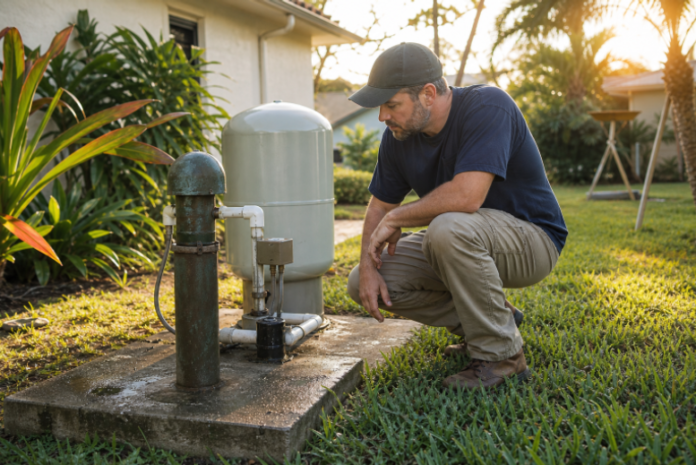
Learning the basic parts of a household well system makes routine checks easier and helps you describe a problem accurately when service is needed.
- Wellhead and cap: The visible top of the well that helps keep debris, insects, and surface water out.
- Casing: The pipe that supports the well opening and separates it from the surrounding soil.
- Pump: The equipment that moves groundwater into the home.
- Pressure tank and switch: Components that help maintain water pressure and control pump cycling.
- Water lines, filters, and treatment units: Equipment that carries water indoors and addresses identified water-quality concerns.
The Annual Well Care Checklist
Set aside time at least once a year to complete a practical well-care review. In Tampa, this is particularly useful before or after the wetter part of the year, when runoff and storm-related damage may be easier to notice.
- Inspect the well cap, casing, and visible fittings for cracks, corrosion, loose parts, or damage.
- Make sure the ground around the well drains away from the casing and does not hold standing water.
- Keep chemicals, fuel containers, pet waste, and yard debris away from the well area.
- Test water through a certified drinking-water laboratory.
- Check the pressure gauge and listen for unusual pump cycling, clicking, humming, or extended run times.
- Inspect filters, treatment equipment, shutoff valves, and any accessible tank connections.
- Review prior test results, filter changes, repair invoices, and notes from earlier service visits.
A Seasonal Reminder
- Spring and summer: Look for storm damage, erosion, flooding, or runoff near the wellhead.
- Fall: Replace filters as needed and inspect exposed equipment before cooler weather arrives.
- Winter: Protect exposed pipes and above-ground components from uncommon but possible freezing temperatures.
When and How to Test Well Water
Routine testing should include the contaminants recommended for local groundwater conditions. A local health department can help homeowners identify appropriate test panels, while a certified laboratory can provide results suitable for health and treatment decisions.
Test promptly after flooding, well repairs, pump replacement, a major change in water taste or odor, visible discoloration, nearby land disturbance, or a long vacancy. Basic home test kits can be useful screening tools, but laboratory testing is a better choice when drinking-water safety is in question.
Warning Signs of a Well or Pump Problem
Pay attention to changes in the way water moves through the home. Warning signs may include low or inconsistent pressure, sputtering faucets, air in plumbing, cloudy or rusty water, a pump that runs too frequently, unusual sounds, unstable pressure-gauge readings, or a complete loss of water.
Do not open energized electrical panels or attempt repairs on pump wiring. Electrical faults, deep-well pumps, pressure switches, and damaged components should be evaluated by a qualified professional.
Choosing Water Treatment Based on Test Results
Treatment should solve a confirmed problem, not simply respond to a water complaint. Hardness may leave scale on fixtures and appliances. Iron or manganese may stain plumbing. Sediment can clog filters and valves. Bacteria, nitrate, arsenic, acidity, and other concerns require treatment selected for the specific result.
Whole-house treatment handles water as it enters the property, while point-of-use equipment treats water at a particular faucet, often for drinking and cooking. Retest after installing or changing treatment equipment to confirm that it is performing as intended.
What to Do After Storms, Flooding, or Power Loss
After a flood, keep people and animals away from standing water near the well, avoid the pump if flooding creates an electrical hazard, and do not drink water from a well that may be contaminated. The steps for protecting a private well after a natural disaster emphasize inspection, testing, and professional assistance before returning the system to normal use.
After a power outage, check the breaker only if it is safe to do so. If a breaker trips repeatedly, do not keep resetting it. Once power is restored, watch for pressure issues or unusual pump cycling, particularly if the property experienced wind damage or flooding.
How to Retire an Unused Well
An unused well should not be left open, damaged, or forgotten. It can serve as a pathway for contaminants to reach groundwater and may pose a physical hazard. Well closure requirements vary by location, so homeowners should contact the appropriate local or state agency and use a qualified well professional to properly seal the well.
Records Every Well Owner Should Keep
Keep copies of well-construction details, pump information, pressure settings, laboratory results, treatment maintenance, filter replacement dates, repair invoices, and notes on flooding or other unusual events. These records make it easier to compare changes over time, plan service, and provide useful information during a future property sale.
Final Thoughts
Reliable private well care comes down to steady habits. Inspect the system, test the water, respond quickly to warning signs, and keep clear records. For Tampa homeowners, a thoughtful routine can help protect water quality through changing weather, changing seasons, and the normal wear that comes with a working well system.