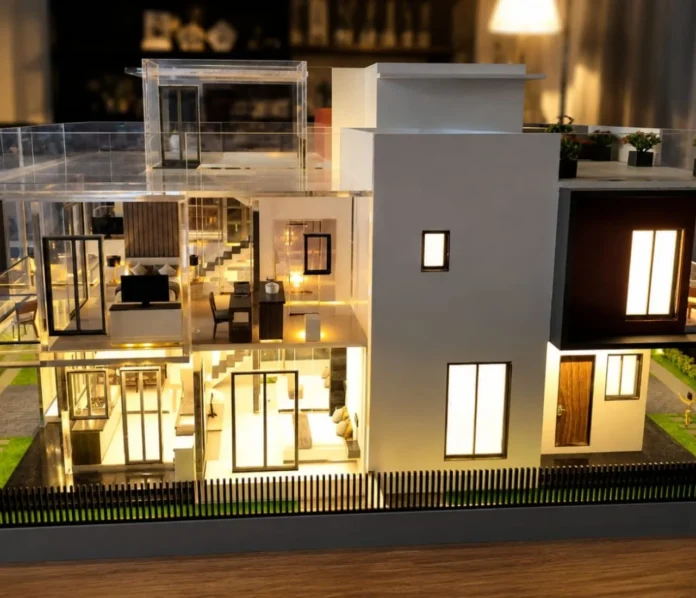

A Different Buyer, A Different Set of Expectations
High-net-worth buyers evaluating a luxury villa aren’t just assessing square footage and location — they’re forming an impression of taste, quality, and exclusivity from the very first interaction with a project, and the presentation materials play a bigger role in that impression than developers sometimes appreciate. A generic sales model that would work fine for a mid-range apartment development often falls flat with this audience, simply because it doesn’t reflect the level of craft the buyer is already expecting from the property itself.
This is exactly why a luxury villa scale model typically demands a different approach from the outset — finer detail, higher-quality materials, and a level of finish that mirrors the standard the actual villa is being marketed on. A buyer considering a significant purchase notices when the sales model feels like an afterthought, and that impression, fair or not, can color how they perceive the whole project.
The Details That Actually Matter to This Audience
Interior detailing tends to matter far more for luxury villa models than it does for typical apartment sales models. Buyers at this level often want to understand the flow of a home in real depth — how the living spaces connect, where the primary suite sits relative to the pool and garden, how much natural light key rooms receive at different times of day. A model that only shows the exterior massing, without any interior detail or removable roof section, misses an opportunity to answer exactly the questions this buyer is most likely to ask.
Material choices in the model itself often get scrutinized more closely too, since a buyer who has already toured comparable luxury properties develops a sharp eye for quality. Genuine wood elements instead of printed wood-grain finishes, precisely fabricated glazing rather than simple flat acrylic panels, and landscaping that reflects the actual planting plan rather than a generic green base all contribute to a model that reads as premium rather than merely adequate.
Scale choice also tends to run larger for luxury villa presentations compared to typical apartment models, since the goal is usually to showcase a single exceptional home in depth rather than represent an entire development at a glance. A larger scale allows room for the kind of interior and landscaping detail that this buyer expects to see.
Where These Models Get Used
Unlike a typical sales office model that sits in one place for the length of a campaign, a luxury villa scale model often needs to travel — to private client meetings, exclusive property showcases, or high-end real estate exhibitions where the audience is specifically curated rather than walk-in general public. This changes some practical considerations around the build, since the model needs to be sturdy enough for transport while still maintaining the delicate detailing that makes it convincing up close.
Custom transport cases, modular construction that allows the model to be broken down and reassembled cleanly, and protective packaging all become more important considerations for this category of model than they typically are for a fixed sales office display that never leaves the building.
Working With the Right Studio for This Level of Work
Given the stakes involved — these models are often supporting single-property sales in the crores rather than a broader multi-unit campaign — it’s worth being especially selective about who builds it. Ask to see prior examples of luxury residential work specifically, since the skills required here, particularly around interior detailing and premium material finishing, differ meaningfully from a studio’s experience with larger, simpler apartment models.
A studio genuinely capable of luxury-tier work will typically ask detailed questions about the buyer profile and the specific selling points of the property before quoting, since a luxury villa scale model built without understanding what makes that particular home special tends to end up technically accurate but emotionally flat — exactly the impression a high-value sale can’t afford to make.
Getting the Presentation Worthy of the Property
A truly exceptional home deserves presentation materials that match its quality, and that principle applies just as much to the physical sales model as it does to the photography, the marketing copy, or the private viewing experience itself. Cutting corners on any one of these elements risks undermining the impression the others are working hard to build.
For developers and agents representing high-value properties, investing properly in this presentation piece isn’t an indulgence — it’s simply matching the standard the property itself has already set, and giving a discerning buyer every reason to trust that the same level of care went into the home as clearly went into the model sitting in front of them.
Handling These Models With the Care They Deserve
Given the fine detail and premium materials typically involved, handling and storage deserve real thought once the model leaves the workshop. Proper display cases, careful transport procedures, and designated staff responsible for moving or presenting the piece all help protect an investment that can represent a meaningful amount of the overall marketing budget for a single property.
Discussing care and handling recommendations with the studio at the time of delivery, rather than assuming any careful person can manage the piece without guidance, helps ensure the model continues to look as sharp in its twentieth presentation as it did the day it arrived from the workshop.
A Presentation That Should Feel Personal
Because luxury property buyers are often considering more than one exceptional option at a time, the presentation experience surrounding a model — the private viewing, the personal walkthrough with an agent, the attention paid to their specific questions — matters as much as the object itself. A stunning model presented carelessly loses some of its impact.
Agents who take the time to genuinely learn the model’s details, so they can walk a prospective buyer through its features confidently and personally rather than reading generic talking points, tend to make a noticeably stronger impression than those simply pointing at the model in passing during a broader property tour.